

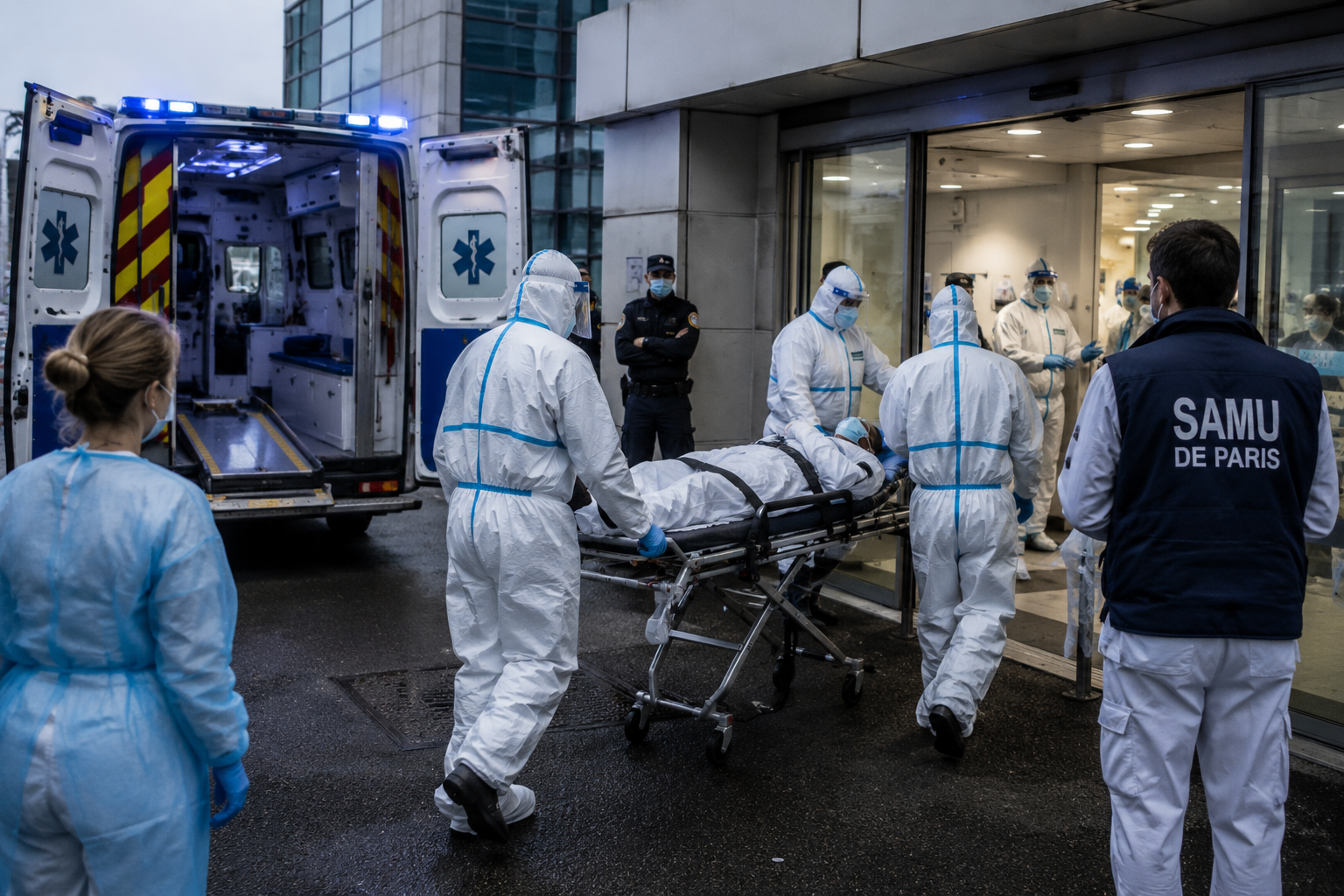
The France Ebola case has quickly become one of the most closely watched health stories in Europe. French authorities confirmed that a doctor returning from a humanitarian mission in the Democratic Republic of the Congo (DRC) tested positive for Ebola, making it the country’s first imported case linked to the current DRC outbreak. The patient is now in a specialized isolation unit, while health teams are tracing contacts and trying to reassure the public that the overall risk remains low.
On the surface, the story sounds alarming. Ebola is one of the world’s most feared infectious diseases, and any case outside Africa immediately grabs global attention. But this situation is also a test of preparedness. French officials say the case was identified quickly, the patient was isolated under strict conditions, and the immediate risk to the wider public remains limited. Even so, the France Ebola case matters because it links Europe directly to a fast-growing outbreak in central Africa that has already crossed borders and stretched local health systems.
The outbreak in the DRC was declared on May 15 and has already become one of the fastest-growing Ebola outbreaks ever recorded in its early weeks. It is being driven by the Bundibugyo strain, a rare form of Ebola for which there is no approved vaccine and no specific approved treatment. That backdrop is what makes the France Ebola case such a serious development, even if France has so far avoided any sign of wider local spread.
France Confirms Its First Ebola Case Linked to the Current DRC Outbreak
The biggest headline in this story is straightforward but important: France has confirmed its first Ebola case tied to the current outbreak in the DRC. The infected person is a doctor who had just returned from a humanitarian mission in Congo. French officials said the case was detected after the doctor came back from an area affected by the outbreak and was then transferred to a specialized medical facility for isolation and treatment. The patient has been reported in stable condition.
This is a major moment for European public health monitoring because it is not simply a historical Ebola case in France. It is directly tied to the current 2026 outbreak in central Africa. It is also the first confirmed case of the current outbreak outside Africa, according to multiple reports, which gives the France Ebola case a much wider significance than a routine imported infection.
France has dealt with Ebola-related situations before, but not like this. During the 2014 West Africa outbreak, two patients were transported to France for care after being diagnosed abroad. This time, however, the infection was identified on French territory, which is why the government is treating it as a major public health event even though the patient was caught quickly and isolated.
Why this case matters so much
The France Ebola case stands out for several reasons:
- It is tied directly to the current DRC outbreak
- It is the first confirmed case in France linked to this outbreak
- It is the first case of the current outbreak reported outside Africa
- The patient is a doctor returning from a humanitarian mission
- The virus involved is the Bundibugyo strain, which has no approved vaccine
That combination turns one imported case into a story with global implications.
The Patient Was Isolated Quickly, and France Moved Fast
One of the most important details in the France Ebola case is the speed of the response. French health authorities said the doctor was isolated immediately upon arrival and transferred under secure conditions to a dedicated specialist facility. Officials stressed that strict biosafety protocols were followed from the start to prevent any contamination risk.
That fast response is a huge part of why health authorities believe the risk to the wider population remains low. Ebola is a dangerous virus, but it does not spread like airborne respiratory diseases. It is typically transmitted through direct contact with bodily fluids of an infected person. That means rapid isolation, careful transport, protective equipment, and contact tracing can dramatically reduce the chance of wider transmission if the case is caught early enough.
Reports said the doctor’s condition worsened during the flight back to France, but the patient was still placed into isolation quickly after landing. That timing matters because the most effective way to stop an imported case from becoming a larger problem is to act before there is a long window of uncontrolled contact. In this case, the French system appears to have done exactly that.
What French authorities did immediately: France Ebola case
According to official reporting, the response to the France Ebola case included:
- Immediate isolation of the patient on arrival
- Transfer to a specialized infectious disease facility
- Launch of an epidemiological investigation
- Identification of close contacts for monitoring
- Public reassurance that the risk to the general population is low
Those steps are standard in serious infectious disease response, but in an Ebola case, speed is everything.
Contact Tracing Began Right Away, Including Flight Passengers
A major part of the response to the France Ebola case has been contact tracing. French authorities tracked down five passengers who had been seated near the doctor on the return flight and placed them in isolation as a precaution, according to CGTN reporting. Other reports said that anyone identified as having been in contact with the patient would be monitored closely, with some sources saying exposed contacts could face 21 days of home isolation and active follow-up by regional health agencies.
This is one of the most important parts of the story because imported cases are not judged only by the patient’s condition. They are judged by how many opportunities the virus had to spread before the person was identified and isolated. In the France Ebola case, authorities appear to be working from a narrow contact window, which is one reason public health officials are not treating this as the beginning of a broader French outbreak.
Contact tracing in Ebola cases is labor-intensive and time-sensitive. It means identifying who sat nearby, who may have had physical contact, who helped the patient, and whether any symptoms develop over the next three weeks. It is not glamorous work, but it is often the difference between a contained case and a chain of transmission.
Why flight contacts matter: France Ebola case
Passengers seated close to an infected person are not automatically infected, but they are important because:
- Symptoms may have worsened during the flight
- Ebola can spread through direct exposure to bodily fluids
- Air travel creates a clear, trackable contact list
- Early isolation of exposed people helps stop any secondary cases
That is why the France Ebola case response moved so quickly from the patient to nearby travelers.
The Outbreak in Congo Is Growing at an Unusually Fast Pace: France Ebola case
To understand why the France Ebola case matters, you have to look at the outbreak it came from. The current Ebola outbreak in the DRC was declared on May 15 and has spread rapidly in a very short time. Different reports on different days gave slightly different totals, but all of them point to the same trend: the outbreak has already crossed the 1,000 confirmed case mark and caused hundreds of deaths within weeks. Reuters reported more than 1,000 confirmed cases and 267 deaths, while other reports cited 1,094 cases and 277 deaths, or 1,118 cases and 291 deaths depending on the date of the update.
What is especially worrying is the speed. Several outlets described this as the highest number of confirmed cases in the first month of any Ebola outbreak. The outbreak is centered in Ituri province in eastern DRC, but it has spread to other areas and has also affected Uganda, raising fears of wider regional spillover.
This context changes the meaning of the France Ebola case. It is not just one doctor returning from an isolated hotspot. It is a case emerging from a rapidly escalating outbreak that international health agencies are already treating as a serious emergency.
Why the Congo outbreak is so difficult to control
The DRC outbreak is especially challenging because it combines multiple risk factors:
- It is being driven by the Bundibugyo strain
- The virus may have circulated undetected for months
- It is affecting areas with conflict and displacement
- Health systems are under strain
- Cross-border movement raises the risk of regional spread
That makes every imported case, including the France Ebola case, a reminder of how connected outbreaks can become.
This Is the Bundibugyo Strain — and That Changes the Risk Picture
Another major detail in the France Ebola case is the strain involved. The current outbreak in Congo is being driven by the Bundibugyo strain of Ebola, which is much less common than the Zaire strain that caused some of the better-known past outbreaks. The Bundibugyo strain is important for one reason above all: there is currently no approved vaccine for it, and reports also say there is no approved specific treatment beyond supportive care.
That does not mean nothing can be done for patients. Supportive medical care still matters enormously in Ebola treatment, especially when it comes to fluids, electrolyte balance, and intensive monitoring. But it does mean health authorities do not have the same vaccine tool they have relied on in some previous Ebola responses.
This is one reason the France Ebola case has drawn such attention from health experts. Imported cases are always serious, but a case linked to a strain with no approved vaccine creates a different kind of concern. It puts even more weight on early detection, isolation, and contact tracing because the preventive toolkit is narrower.
What makes Bundibugyo different
The Bundibugyo strain stands out because:
- It is rare compared with other Ebola strains
- There is no approved vaccine for it
- There is no approved targeted treatment currently available
- It still causes severe hemorrhagic fever
- Outbreak control depends heavily on traditional containment measures
That makes the public health response around the France Ebola case even more important.
Why France Says the Risk to the Public Is Still Low
Despite the seriousness of the virus, French and international officials have repeatedly said that the risk to the wider public remains low or very low. That may sound surprising given Ebola’s reputation, but it reflects how the virus spreads and how quickly this particular case was managed.
Ebola is not like a highly contagious airborne virus. It generally spreads through close physical contact with bodily fluids from an infected person who is symptomatic. That makes casual community transmission much less likely in a country with strong hospital isolation systems, rapid testing, and structured contact tracing. French officials emphasized that the case was detected quickly and that there was no indication of local spread at the time of the announcement.
That said, “low risk” is not the same as “no risk.” Public health teams still have to monitor contacts, check for symptoms, and keep the situation under close review. A contained case remains contained only if the system keeps doing the work.
Why experts are not calling this a European outbreak
There are several reasons the France Ebola case is not currently being treated as a wider European emergency:
- The patient was isolated quickly
- Authorities identified a limited contact pool
- Ebola requires close contact rather than casual exposure
- France has specialist facilities for high-risk infectious diseases
- There is no sign of local community transmission so far
That combination is why officials are urging calm rather than panic.
France’s Case Is a Warning About Global Health Links, Not Just One Patient
The France Ebola case is not only a French health story. It is also a reminder of how quickly local outbreaks can become international concerns when doctors, aid workers, travelers, and humanitarian staff move between regions. The infected patient in this case was a doctor returning from a mission to help during the outbreak — a detail that underscores both the risks frontline workers face and the global nature of epidemic response.
This is also why imported cases often have an outsized political and media impact. Even if they remain isolated, they force governments to prove that airport screening, hospital preparedness, laboratory testing, and public communication systems are working. In the France Ebola case, the early signs suggest France’s response mechanisms worked the way they were supposed to. But the case also shows how fragile that reassurance can feel when the virus involved is Ebola and the outbreak source is still expanding overseas.
For Europe, the message is clear: even if the risk of widespread spread is low, the need for preparedness is constant. Diseases do not stay inside national borders simply because health systems are stronger on one side of a flight route than the other.
Final Thoughts
The France Ebola case is a serious development, but it is not a sign that France is facing an uncontrolled Ebola outbreak. What it does show is that Europe is not insulated from the consequences of a fast-moving epidemic in central Africa. A doctor returning from a humanitarian mission in the DRC has become the first imported Ebola case in France linked to the current outbreak, and that alone is enough to put public health systems on alert.
The reassuring part of the story is that the patient was isolated quickly, the condition is stable, and contact tracing began immediately. French authorities say the risk to the wider public remains low, and there is no evidence of local spread so far. But the bigger lesson is harder to ignore. The outbreak in Congo is growing rapidly, it involves the Bundibugyo strain with no approved vaccine, and it has now produced the first confirmed case of the current outbreak outside Africa.
In short, the France Ebola case is both a warning and a test, a warning about how connected outbreak risks have become, and a test of whether rapid detection and disciplined containment can keep one imported infection from becoming something larger.
Read Other Interesting news here: Australia Bird Flu
